

On August 26, the U.S. celebrated Women’s Equality Day, which celebrates the certification of the 19th Amendment in 1920, finally giving women the right to vote. Women’s Equality Day was introduced in Congress by Rep. Bella Abzuz, a Democrat from New York, and it passed in 1973.
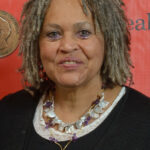
When we think of equality, we need to remember the many women who have fought in the past and continue to fight in the present to be sure that women have the same rights as men. One of those present-day women is Charlayne Hunter-Gault who began her fight for equal civil rights as a student. Hunter is the daughter of a former U.S. Army Colonel Charles Hunter, Jr., who was a chaplain serving in Alaska in 1955, and his wife Althea Brown. At the age of 13, Charlayne was the only black student in the army school in Alaska.
Following Charlayne’s eighth grade year in Alaska, her parents divorced, and Charlayne moved to Atlanta with her mother, grandmother, and siblings. There she attended Henry Michael Turner High School, where she excelled at academics and began preparing for her career in journalism as editor-in-chief of the school newspaper and assistant yearbook editor.
Her strong academic record drew the attention of the Atlanta Committee for Cooperative Action (ACCA). Committee members were searching for outstanding African-American students in Atlanta who could begin the process of integrating white universities in Georgia. Charlayne Hunter and Hamilton Holmes were selected by the committee to apply to Georgia State College, which later became Georgia State University. However, both students were more interested in attending the University of Georgia, so they applied there.
The committee reasoned that the university could not justify rejecting the two students’ applications on the basis on academics, so they were hoping to break the race barrier. However, the university rejected both of them with the excuse that there was no more room for freshmen in the dorms. They both enrolled in black universities and applied quarter after quarter with the same response from the University of Georgia even though the university accepted other transfer students to live in the dorms. Holmes and Hunter took the case to court in Holmes v. Danner. The school registrar, Danner, was the defendant. Holmes and Hunter won the case and in January 1961, they became the first African-American students to enroll in the University of Georgia. A few days after they enrolled, about 1,000 protesters, including Ku Klux Klan members, rioted outside Hunter’s dorm and threw items through the window. Hunter and Holmes were then suspended by the dean and sent home, but this suspension was thrown out by a court order. The mob action did not deter Hunter and Holmes. Both went on to graduate from the university in 1963. Charlayne graduated with a B.A. in journalism.
A few months before graduation, Charlayne encountered additional discrimination when she married a white student, Walter Stovall. The couple had two ceremonies, one in March 1963 in an unnamed state. Fearing that their marriage might be invalid and even illegal in that state, they married again in a second ceremony in Detroit, Michigan in June 1963. After they announced the marriage, the governor of Georgia called it a “disgrace,” and the attorney general stated that he might bring charges against the couple under Georgia law. Years later after the couple had divorced, Charlayne made a speech at the University of Georgia where she praised Stovall who she said “jumped into my boat with me.” He had been willing to give up things he loved to do when he married her. Charlayne said that Walter loved going to the movies, but he gave that up because the theaters were segregated. He gave up restaurants and other places that would not serve Charlayne. Hunter and Stovall divorced in 1971, and Hunter married her second husband, Ronald Gault, a black businessman who worked for the Ford Foundation at that time.
Within four years of graduation, Hunter was a rising star in her journalistic career, which at that time consisted of mostly white males. In 1967, she became part of the investigative news team at WRC-TV in Washington, D.C., and was the evening news anchor. A year later, she became a metropolitan reporter for The New York Times, covering the black community in the city. In 1978, Jim Lehrer recruited Hunter as a substitute anchor on the MacNeil/Lehrer Report, which led to her working almost 20 years for Lehrer at PBS and becoming The NewsHour’s correspondent in 1983. Hunter won two Emmys and a Peabody for broadcast work on Apartheid’s People, which featured her reporting in South Africa for Lehrer, and she fondly remembers Lehrer telling her to be sure to get an interview with Nelson Mandela when Mandela was released from prison. She was one of the few reporters to get a personal interview. In 1997, Hunter left The NewsHour to join her husband in Africa and took a position as NPR’s chief correspondent there. Two years later, CNN hired her as its Johannesburg bureau chief, and she held that position from 1999 until 2005.
In 1992, Hunter wrote a book about her fight for equal rights at the University of Georgia, which later dedicated a building to her and Hamilton Holmes. In an interview about that experience, Hunter later said that she heard the mob say the words, “Nigger, go home,” and she looked around and thought, “I know it’s not me, ’cause I’m a queen.” This year, 2026, marks the 65th anniversary of Hunter and Holmes’ acceptance at the University of Georgia, which led to desegregation at many other colleges and universities.
From a young age, Hunter was willing to fight for equal civil rights to choose where she got her education and to choose the person she wanted to marry, even when people protested and threatened her safety. And she went on to become one of the women who broke the glass ceiling in journalism and TV broadcasting. In a memorial to Jim Lehrer, she credits him for being a man who valued diversity and strong women and who was willing to hire a woman who happened to be black and promote her to a leadership role at a time when women were not given leadership roles in broadcasting. She also said that she had the experience and qualifications to do the job well, and Lehrer hired her for her ability to do the job.
Sources
https://en.m.wikipedia.org/CharlayneHunter-Gault
https://nieman.harvard.ed/2005/03
https://scifind.libs.uga.edu
https://politico.com
“Jim Lehrer: An Unimpeachable Journalist Who Made His Colleagues Better,” December 26, 2020