
It’s difficult to keep track of all the distractions the Trump administration throws at the American people so we don’t notice how the government is chipping away at democracy. One such example is the January 20, 2025, executive order (EO 14160), which Trump issued in an attempt to end citizenship rights to children born in the U.S. to undocumented parents or persons who are here legally but on a temporary visa. This would apply to children born to a mother who is undocumented or here temporarily AND a father who is not a citizen or permanent resident.
Currently, the 14th Amendment guarantees citizenship to children born in the U.S., stating “All persons born or naturalized in the United States, and subject to the jurisdiction thereof, are citizens of the United States and of the State wherein they reside.” This amendment was ratified in 1868, following the Civil War, to grant citizenship to Black people who had been denied citizenship earlier. The amendment was challenged 30 years later, in 1898, over an immigration argument similar to the argument being used today. Wong Kim Ark was born in the U.S. in 1873 to parents who were permanent residents, but not citizens. In his twenties, he left the country to visit China and was initially denied re-entry to the U.S. by immigration officials who said he wasn’t a citizen. Wong fought back, and in the case entitled United States v. Wong Kim Ark, the Supreme Court determined that the 14th Amendment gives birthright citizenship to children born in the United States, even if their parents are not U.S. citizens. A few exceptions exist, such as children born to foreign ambassadors.
The Supreme Court took up the current class action suit, Trump v. Barbara, on April 1, 2026, and is expected to render a decision this summer. Morenike Fajana, senior counsel for the Legal Defense Fund, stated “We are confident in our case against such an unlawful attempt to rewrite the Constitution in a way that is antithetical to who we are as a nation.” However, many Americans are concerned about the implications if the Supreme Court does not uphold the 14th Amendment and revokes citizenship for people who are already citizens, requiring them to obtain copies of their parents’ birth certificates. Some children might be born “stateless” if the birth country of the parents refuses to give children citizenship status. And many young people who have never been to Mexico and may not speak the language might be forced to leave the United States. An even worse outcome would be the upheaval in our society by the creation of a class of U.S. born individuals who cannot work legally, receive benefits such as financial aid and in-state tuition, and reach their full potential educationally and emotionally. The U.S. is already divided about what is happening in our country, and overturning the 14th Amendment would create further division.
This is not the first time the U.S. has tried to take away citizenship from immigrants. Ironically, similar policies occurred in the U.S. During the Great Depression. From 1929 to 1933, the Hoover administration deported thousands of immigrants to Mexico, and Mexico repatriated them. Sometimes the city and state governments in America pushed for deportations and deported more people than the federal government. Estimates range from a half million to a million people who were forced to leave or voluntarily left in those four years. Half were U.S. citizens; many of those were children.
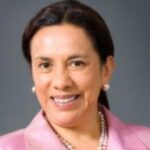
Antonia Hernandez, a young girl born in Mexico in 1948, knew the deportation story because her grandparents and father, who was born in Texas, were forced to deport from the U.S. to Mexico during the Depression. In 1956, her father decided to move his family back to the U.S., and the family moved to a housing project in east Los Angeles when Antonia was eight years old. The adults worked in chicken and manufacturing factories during the winter and were migrant farmers in the summer. Antonia attended school and sold her mother’s tamales door-to-door on the weekends. And she picked crops in the summer with the rest of the family. She also attended civil rights and Chicano protests with her father in the 1960s, which fueled her desire for racial justice and equal rights.
After graduating from high school in 1966, Antonia went to East Los Angeles College and was later accepted at UCLA as part of an affirmative action program. She earned both her B.A. and her J.D. there and graduated from UCLA Law School in 1974. Shortly thereafter, she became an American citizen and got a job with the Los Angeles Center for Law and Justice. In 1978, Antonia was one of the lawyers on a class action suit that made national headlines, Madrigal v. Quilligan. Ten Latino women accused USC/Los Angeles County Medical Center doctors of sterilizing them after they gave birth without informed permission or through coercion while in labor. A doctor lied to one patient, telling her that her husband had signed for her to have the sterilization procedure. This was not true. None of the women spoke English fluently. Even though the women lost the case, the public outcry caused the medical center and the state of California to pass new laws to stop deceitful sterilization. The federal government had given funds to states to encourage sterilization, and California had one of the highest rates of sterilization in the U.S.
The following year, Antonia became the staff counsel for the Senate Judiciary Committee and was the first Latina lawyer in that position. Two years later, she took a job as Regional Counsel in Washington, D.C., at the Mexican American Legal Defense and Educational Fund (MALDEF). Within a few years, she had moved up to become President and General Counsel of MALDEF. Under her direction, MALDEF filed important voting rights cases and stopped gerrymandering in many states, including California, Texas, Illinois, Wisconsin, and Michigan. The organization also defended The Voting Rights Act of 1965. Hernandez knew the importance of representation and organized campaigns to convince Latinos to participate in the census in 1990 and 2000. She also participated in the battle against Proposition 187 in California, which would have kept undocumented immigrants from public education and hospital services. During Antonia’s leadership, MALDEF made education a priority issue for Latinx students and brought lawsuits so that children could receive bilingual and multicultural education and have access to higher education after public school, just as Antonia had done. This included a campaign for the rights of undocumented students to attend state universities, pay instate tuition, and access scholarships. This was especially important because these students were not eligible to receive federal financial aid since they were not citizens.
In 2004, Hernandez left MALDEF to become President and CEO of the California Community Foundation (CCF), which raises money to improve the lives of people in L.A. County. During Antonia’s leadership, the organization has given almost two billion dollars to housing, education, health, and immigration-related initiatives. Hernandez is currently a fellow of the American Academy of Arts and Sciences and the American Law Institute. She is also a trustee for the Rockefeller Foundation.
Resources:
Type in “Antonia Hernandez” after accessing the following websites:
https://www.acslaw.org
https://www.womenshistory.org
https://www.maldef.org
https://abawtp.law.stanford.edu